Día de los Muertos 2026, explained with care
Short answer
In 2026, Día de los Muertos falls on Sunday 1 November and Monday 2 November. Many families in Mexico and many Mexican communities elsewhere use these days to remember people who have died, often with an ofrenda at home, cempasúchil flowers, food, and visits. Practices vary by family and region. The days are not Halloween or a costume assignment, and a careful explanation starts from what a family actually does.
Two dates, and no single script
In 2026, 1 November is a Sunday and 2 November is a Monday. Those are the dates most people mean by Día de los Muertos, or Día de Muertos. English speakers often say Day of the Dead. The Spanish names are worth learning, because they are the names families actually use.
This is a remembrance tradition. People set aside time for relatives and friends who have died. The tone in many homes is warm and busy: flowers, food, music, stories, and a place in the house for the person being remembered. It is not a horror holiday, and this article will not treat it as one.
There is no single correct version. Practices vary by family and by region in Mexico, and they vary again among Mexican communities elsewhere. A town in one state and a family that has lived for generations in another country may share the dates and still not share the details. If a handout says they always, ask who they are.
If the tradition is not yours, learn the common objects, notice the variation, and do not perform someone else's grief as a costume. Remembering a person can bring up sadness. If the feeling is heavy, talk with a parent, a teacher, or another adult you trust. This page is an explainer, not counseling and not medical advice.
What an ofrenda is for
An ofrenda is an offering. In many homes it is a table, a shelf, or a corner for the people the family wants to remember. It is often in the living room, built by the people who knew the person, then taken down when the days end.
Common objects include a photograph, candles, a glass of water, salt, flowers, and food the person liked. Papel picado, colored paper cut into patterns, may hang above the table. A pet's photo appears in some families. None of these items is a magic kit you must complete. A family with one photo and a flower has still made an ofrenda. A family that does not build one has not failed the holiday.
The objects have meanings that hosts can explain better than a stranger can. Water is often described as refreshment for the visiting spirit. Salt is described, in many tellings, as purification. Candles are light for the way. Food is hospitality, the same hospitality you would offer a living guest who had a favorite meal. When you write about this, use phrases like "many families say" unless you are quoting a specific person.
A school ofrenda needs extra care. It should not invent a fictional relative for laughs. It should not use a celebrity's death as a punchline. If the class remembers someone connected to the school, a teacher should lead, and students who are not part of the tradition can help with chairs, printed explanations, and quiet. Guests can look. They do not need to touch every object. Photos of real people are not props.
If your own family keeps an ofrenda, you already have a teacher. Write down what they put out and why, in their words. That notebook will be more accurate than a general article, including this one.
Cempasúchil and the other things people recognize
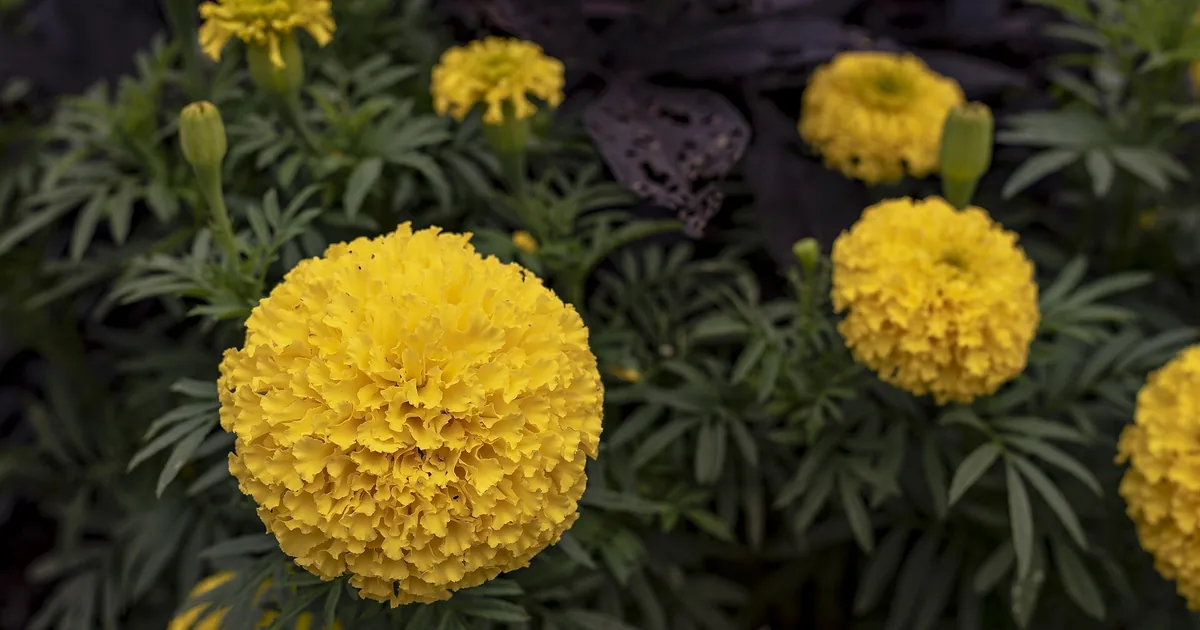
Cempasúchil is the Mexican marigold, often bright orange or yellow. The botanical name you may see in a science class is Tagetes erecta. In many explanations, the color and the strong scent help mark a path. Families grow the flowers, buy them in markets, or use petals to trace a line toward the ofrenda. Other flowers appear too. Marigolds are common. They are not the only bloom that counts.
You can learn the flower without turning it into a stereotype. Draw it from a photo of the actual plant. Notice the layered petals. You do not need a cartoon of a person attached to the drawing. If a craft sheet adds a sombrero, a mustache, or a joke about spicy food, it is teaching a stereotype, not the flower. Skip that sheet.
Pan de muerto, bread of the dead, is a sweet bread many bakeries sell in the season. Shapes and recipes differ by region. Some loaves have bone-like pieces of dough on top. It is food for the table, not a prop to smash for a photo.
If you visit a market or a home ofrenda, ask before you photograph a stall or a person. A stranger's family photo is not a free classroom illustration.
Visits, food, and public events
Many families visit a cemetery. They may clean the grave, repaint a name, bring flowers, play music, and eat together. In some towns the cemetery is full and bright at night. In others the visit is short and quiet in the afternoon. Both are real. Neither gives you permission to wander a graveyard as a tourist and sit on someone's stone for a photo.
Monday 2 November 2026 is a weekday. In places where it is not a day off, families often move the longer visit to Sunday 1 November or to the Saturday before. Sunday is the easier public day on this year's calendar. Do not assume a classmate can stay out late on Monday. Ask, and accept a short answer.
Food follows the person being remembered as much as it follows a region. One table has mole. Another has the breakfast the person cooked every week. Tamales, fruit, a bottle of a drink they liked, or a single candy can all be sincere. If you are invited to eat, take a small portion and say thank you. If you are not invited, do not treat the ofrenda food as a sample station.
Lists kept by organizations such as UNESCO can recognize the tradition. Recognition is not a rulebook, and families keep changing the details.
How these days differ from Halloween
Halloween in 2026 is Saturday 31 October. Día de los Muertos is the Sunday and Monday immediately after. The closeness on the calendar is the main reason people fold them together. The fold is a mistake.
Halloween, as many neighbourhoods practice it, is a folk custom of costumes, porch lights, and short visits. A practical version of that plan is in <a href="/blog/halloween-2026-saturday-neighbourhood-plan/">the Halloween neighbourhood guide</a>. It is allowed to be playful. It is not a memorial rite.
Some families enjoy both. A child might visit porches on Saturday and help with flowers on Sunday. That is a both, not a blend. The costume stays in the Halloween box. The ofrenda is built with the adults who know the people in the photos.
Put the events on different calendar lines. Saturday can stay an optional folk custom. Sunday and Monday are remembrance, varying by family, never a costume grade. The <a href="/exam-calendar/">exam calendar</a> can hold those lines so a project does not collide with a test.
A worked example of a respectful class project
This example uses no real family. Copy the structure, not a fictional biography.
A student who did not grow up with the tradition has a four-minute talk on Monday 2 November. The teacher has said the class must not wear costumes for this assignment. The student has two weekend blocks of 25 minutes, already placed so they do not erase Sunday plans at home.
Block one, Sunday afternoon. They read a short museum or library page and this explainer. They write three objects: photograph, cempasúchil, water. Next to each they write "many families use this" and one plain function. They add a fourth line: "Practices vary by family and region. I will not say always."
Block two, Sunday evening. They draft a difference from Halloween in two sentences. They write one question they could ask a classmate who offers to share: "What does your family do, if you want to tell us?" They also write the sentence they will use if nobody offers: "I can describe the ofrenda from published sources, and I cannot describe your house."
They do not build a pretend altar on a desk. They do not download a photo of a real grave. They do not practice an accent. If a relative of their own has died and they want to mention that person, they ask a parent first. The <a href="/age-calculator/">age calculator</a> is only for a date the family has agreed to include, such as a birth year on a private timeline, not for a stranger.
On Monday they speak for four minutes, then stop. If they later visit a friend, they ask what to bring. They use a <a href="/world-clock/">world clock</a> if grandparents are in another country. Much of the United States sets clocks back at 2:00 a.m. on Sunday 1 November 2026, and most of Mexico does not. The habit is in <a href="/blog/how-to-convert-time-zones/">how to convert time zones</a> and the dates are in <a href="/blog/clocks-change-october-november-2026/">the clock-change guide</a>.
Common mistakes
Using one poster as the whole country. Markets, night cemeteries, and quiet apartments are all possible. Name the source of your example.
Collapsing the days into Halloween. Adjacent dates are still different practices. Keep Saturday's costumes off Sunday's table.
Sugar-skull makeup as a joke. Face paint that copies a memorial art, worn to be funny, is not learning. Skip it unless a family who keeps the tradition invites that craft and explains it.
Touching or photographing graves and home ofrendas without permission. Interest is not consent.
Stereotypes instead of objects. Hats, accents, and food jokes do not explain cempasúchil, papel picado, or a photograph.
Turning grief into extra credit. If a classmate does not want to talk about someone who died, that boundary ends the questions. You still have books and museums.
Ignoring the weekday. Monday 2 November may be busy. Offer a Sunday time for a group project, and let people decline.
A checklist before you speak or build
What to do this week
Learn the two dates and one object well enough to explain them without notes. Cempasúchil is a good choice. Say what it is, where it often appears, and that not every family uses it.
If the tradition is in your home, ask one adult what they would like a visitor to understand. Write their answer in their words. If it is not in your home, read one reliable page and add the sentence about variation. Do not build a costume.
Put Sunday 1 November and Monday 2 November on a calendar beside Saturday 31 October, with a gap between them. The gap is the lesson. They are neighbours on a month page, and they are not the same day.
Frequently asked questions
What are the dates in 2026?
Día de los Muertos is observed on 1 and 2 November. In 2026 those dates are a Sunday and a Monday. Many communities connect 1 November with children who have died and 2 November with adults, but that split is not universal. Monday may be a school or work day, so some families visit on the weekend. Ask which day matters in the household you are learning from.
Is this the same holiday as Halloween?
No. Halloween, including Saturday 31 October 2026, is a costume and neighbourhood-visiting custom. Día de los Muertos is a way of remembering the dead, kept in many forms in Mexico and among Mexican communities elsewhere. The dates are next to each other, which tempts people to blend them. A Halloween plan should not copy an ofrenda as a joke or treat skull face paint as a costume.
Can a student build an ofrenda for class?
Only with guidance, and not as a gag. An ofrenda is a family offering, often with photos, candles, water, flowers, and food linked to real people. A class version should be led by a teacher and, when possible, by families who observe the days. Students who are guests can help with setup and respectful questions. Do not invent a pretend death or use the table to tease a culture.
Do all Mexican families celebrate the same way?
No. Practices vary by family and by region, inside Mexico and in Mexican communities elsewhere. Some homes build a large ofrenda. Some visit a cemetery. Some cook a particular meal. Some mark the days quietly or not at all. Say in this family or in this town, not that everyone does the same thing. If you do not know, ask, or describe the variation.



