How to Simplify a Ratio and Solve Proportions (With Examples)
Short answer
To simplify a ratio, divide both parts by their greatest common factor (GCF). For 24:36 the GCF is 12, so 24 ÷ 12 : 36 ÷ 12 = 2:3. If the parts are decimals or in different units, first turn them into whole numbers in the same unit, then divide. A simplified ratio is the key to scaling recipes, splitting money fairly and solving proportions such as 3:4 = 15:20.
Ratios turn up far more often than most people notice. A recipe asks for two parts rice to three parts water, a map says 1:50,000, a phone screen is 19.5:9, two friends split a bill 3:2, and almost every bank, railway and staff-selection exam has a ratio question in the maths section. The good news is that nearly all of these problems use the same two skills: simplifying a ratio and scaling it up or down. This guide walks through both with real numbers, and our free ratio calculator checks each answer instantly.
What a ratio actually tells you
A ratio compares two or more amounts of the same kind. The ratio 2:3 means "for every 2 of the first thing there are 3 of the second". It says nothing about the real size of the amounts: 2 cups to 3 cups and 200 g to 300 g are both 2:3. That is why ratios can be simplified, just like fractions. In fact, a two-part ratio a:b is closely related to the fraction a/b, so the same tricks from our guide to working with fractions apply here.
How to simplify a ratio in three steps
- Make the units match. Both parts must be in the same unit before you compare them. Turn metres into centimetres, hours into minutes, and so on.
- Clear any decimals or fractions. Multiply both parts by 10, 100 or the common denominator until they are whole numbers.
- Divide by the greatest common factor. Find the largest number that divides both parts exactly, and divide both by it. If no number bigger than 1 divides both, the ratio is already in its simplest form.
Example 1: a simple whole-number ratio
A class has 24 girls and 36 boys. The ratio is 24:36.
- Factors that divide both: 2, 3, 4, 6 and 12. The greatest is 12.
- 24 ÷ 12 = 2 and 36 ÷ 12 = 3, so the ratio is 2:3.
Not sure of the GCF? Divide by any common factor you can see (say 2) and keep going: 24:36 → 12:18 → 6:9 → 2:3. You reach the same answer, just in more steps. Type 24 and 36 into the ratio calculator and it shows 2:3 straight away.
Example 2: decimals and mixed units
Decimals: a paint mix uses 1.5 litres of blue to 2.5 litres of white. Multiply both by 10 to get 15:25, then divide by the GCF of 5 to get 3:5.
Different units: compare 50 cm with 2 m. First write 2 m as 200 cm, so the ratio is 50:200. The GCF is 50, which gives 1:4. Skipping the unit step would give the wrong answer of 25:1, which is a very common exam trap.
Example 3: solving a proportion (A:B = C:D)
A proportion says two ratios are equal. To find a missing value, cross-multiply: A × D = B × C.
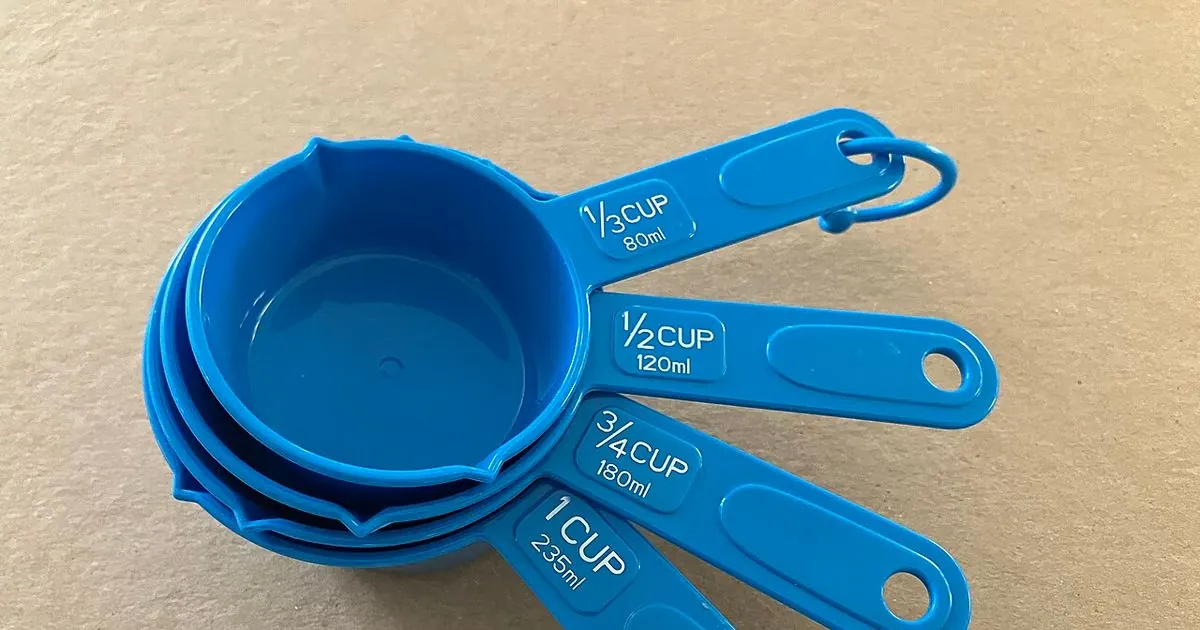
A pancake recipe uses 3 cups of flour to 2 cups of milk. You want to use 4.5 cups of flour. How much milk do you need?
- Set it up: 3:2 = 4.5:D
- Cross-multiply: 3 × D = 2 × 4.5 = 9
- Divide: D = 9 ÷ 3 = 3 cups of milk
In the calculator, enter 3, 2 and 4.5 in A, B and C, and leave D empty. It fills in 3. The same method resizes photos and videos: our aspect ratio calculator uses it to find a missing width or height, and the aspect ratio guide explains why 1920×1080 simplifies to 16:9.
Example 4: sharing an amount in a ratio
Two friends put money into a small stall in the ratio 3:4 and earn a profit of 70. How much does each get?
- Add the parts: 3 + 4 = 7 parts in total.
- Find one part: 70 ÷ 7 = 10.
- Multiply: 3 × 10 = 30 and 4 × 10 = 40.
Check: 30 + 40 = 70, and 30:40 simplifies back to 3:4. Enter the total in the "split this total" box of the ratio calculator to do this in one go. If you would rather see the shares as percentages, 3 out of 7 parts is about 42.9%, which you can confirm with the percentage calculator.
Example 5: ratios with three parts
The rules do not change when there are more parts. A fruit punch uses 12 parts juice, 18 parts soda and 30 parts water. The GCF of 12, 18 and 30 is 6, so the simplest ratio is 2:3:5. To make 5 litres, divide 5 by the 10 total parts (0.5 litres per part), giving 1 litre of juice, 1.5 litres of soda and 2.5 litres of water. Our calculator handles two parts at a time, so for three parts simplify by hand or check two pairs separately.
Ratios in competitive exams
Ratio and proportion is a regular topic in quantitative aptitude papers such as SSC CGL, IBPS PO and clerk exams, CAT and many school-level tests. A typical question looks like this: "The ages of A and B are in the ratio 3:5 and their sum is 48. Find their ages." Treat it exactly like the stall example: 3 + 5 = 8 parts, 48 ÷ 8 = 6 per part, so A is 18 and B is 30. Speed comes from practice, so time yourself on ten such questions a day. Our SSC CGL guide, the IBPS PO and clerk guide, the exams hub and our free study guides cover the syllabus and how to plan revision. ViralScopeHub is not affiliated with any exam board; always check the official notice for the current pattern.
Ratios in everyday life
| Where you see it | Example ratio | What it means |
|---|---|---|
| Cooking rice | 1:2 | 1 cup of rice to 2 cups of water |
| Map scale | 1:50,000 | 4 cm on the map is 200,000 cm, or 2 km, on the ground |
| Screen shape | 16:9 | 16 units wide for every 9 units tall |
| Concrete mix | 1:2:3 | Cement, sand and gravel by volume |
| Exchange rate | 1 CAD : 0.72 USD | How much of one currency equals one unit of another |
An exchange rate is really a ratio too, which is why scaling a holiday budget works the same way. Our guide on reading an exchange rate and the currency converter do the sums for real rates, and the flights hub helps you compare fares once the budget is set. (The 0.72 in the table is only an illustration, not a live rate.)
Common mistakes to avoid
- Swapping the order. "Boys to girls" and "girls to boys" are different ratios. Keep the parts in the order the question uses.
- Mixing units. Always convert to the same unit first, as in the 50 cm : 2 m example.
- Stopping too early. 6:9 is correct but not simplest. Keep dividing until no common factor is left.
- Confusing a ratio with a fraction of the total. In 3:4, the first share is 3/7 of the total, not 3/4.
Once these habits are in place, ratio problems become some of the quickest marks on any maths paper, and everyday jobs like doubling a recipe take seconds. For more practice, try our guide to finding a percentage of a number or the fraction calculator.
Frequently asked questions
How do you simplify a ratio quickly?
Find the greatest common factor of both parts and divide each part by it. For example, 18:24 has a GCF of 6, so it simplifies to 3:4.
How do you simplify a ratio with decimals?
Multiply both parts by 10 or 100 until they are whole numbers, then divide by the greatest common factor. 0.6:1.5 becomes 6:15, which simplifies to 2:5.
How do you split an amount in a given ratio?
Add the parts of the ratio, divide the amount by that total to find one part, then multiply by each part. Sharing 70 in the ratio 3:4 gives 30 and 40.
What is the difference between a ratio and a fraction?
A ratio compares parts with each other, while a fraction compares a part with the whole. In the ratio 3:4 the first part is 3/7 of the total.
How do I find the missing number in a proportion?
Cross-multiply. In 3:2 = 4.5:D, 3 × D = 2 × 4.5, so D = 3.