What Bid and Ask Mean
Short answer
The bid is the price a buyer will pay. The ask, also called the offer, is the price a seller will accept. The spread is ask minus bid. A school-fair sample with a bid of 8 and an ask of 10 has a spread of 2. A wider spread means those two posted prices sit farther apart, so the gap in the arithmetic is larger. This is a definition, not a trading lesson.
Some prices come in pairs. One number is what a buyer is willing to pay. The other is what a seller is willing to accept. The gap between them has a short name. This article defines the bid, the ask, and the spread. It uses a school-fair stall and a currency SAMPLE so the subtraction is visible. It is not a trading lesson, and it is not a recommendation to buy or sell anything. Displayed prices move. A page like this one cannot show a live order book.
Two posted prices
A single price tag is easy. A pair of prices needs labels. The bid is the buyer's number. The ask is the seller's number. People also call the ask the offer. In this article, ask and offer mean the same posted seller price.
The spread is the ask minus the bid. The order of the subtraction matters. Ask minus bid is a positive gap when the seller's number is above the buyer's number, which is the usual way the cards are written. Bid minus ask flips the sign. Distance is easier as a positive width, so the formula here is spread = ask minus bid.
That is the definition. The rest of the page applies it twice, once in tokens at a fair and once in a SAMPLE currency pair, and then says what the definition does not decide.
A midpoint sits between the cards
Add the bid and the ask, then divide by 2, and you land on the midpoint. The midpoint summarizes the two posted prices. It is not a third offer you can demand. In the currency SAMPLE later, the midpoint is 0.92 euro per dollar, chosen so it matches the practice rate in the <a href="/blog/how-to-read-an-exchange-rate/">exchange-rate article</a>. The match is a teaching link. It is not evidence that a market printed these numbers.
Bank rates, card rates, and airport rates differ from a mid-market rate. A customer number can be built from a spread, from a separate fee, or from both. This page shows the spread arithmetic and leaves real fee schedules to the bank that wrote them.
A sample stall at a school fair
Picture a stall at a school fair. The goods are paper bookmarks from an art class. Prices are in tokens, a play currency, so nothing here is a stock or a suggestion to spend real money. Two cards hang on the stall.
SAMPLE bid: 8 tokens. That is what a buyer at this stall is willing to pay for one bookmark.
SAMPLE ask: 10 tokens. That is what the seller is willing to accept.
SAMPLE spread: 10 minus 8 equals 2 tokens.
Read the cards by role. A buyer who will pay 8 is posting a bid. A seller who will accept 10 is posting an ask. If those are the only two numbers, there is no single "the price." There are two posted prices and a gap of 2.
The midpoint is (8 plus 10) divided by 2, which is 9 tokens. Nine is a handy summary. It is not printed on either card. Someone who only remembers "about 9" has lost the spread. The cards still say 8 and 10.
A wider fair spread
The same words on a sample currency pair
Currency desks use the same three words. The thing being priced is one currency measured in another. This section uses euros per one US dollar, so the dollar is the base and the euro is the quote. The <a href="/blog/how-to-read-an-exchange-rate/">base and quote guide</a> shows how to read that order.
SAMPLE bid: 0.90 EUR per 1 USD. A buyer in this example will pay 0.90 euro for one dollar.
SAMPLE ask: 0.94 EUR per 1 USD. A seller in this example will accept 0.94 euro for one dollar.
SAMPLE spread: 0.94 minus 0.90 equals 0.04 EUR per 1 USD.
SAMPLE midpoint: (0.90 plus 0.94) divided by 2 equals 0.92 EUR per 1 USD.
The 0.92 midpoint is the classroom figure from the exchange-rate article. Using it here lets you see a single rate and a two-price board without pretending either number was copied from a live screen. Central banks publish reference rates for information. Those pages are not an order book, and they are not the rate a card payment will show. Bank, card, and airport rates differ from a mid-market rate.
Apply the pair to 50 US dollars.
At the SAMPLE bid, 50 times 0.90 equals 45 EUR.
At the SAMPLE ask, 50 times 0.94 equals 47 EUR.
The two results differ by 2 EUR.
Multiply the amount by the spread and you get the same gap. 50 times 0.04 equals 2 EUR. On 100 dollars the same spread is 4 EUR, because the gap scales with the amount.
A wider currency spread around the same middle
Hold the midpoint at 0.92 and widen the cards. SAMPLE bid: 0.88 EUR per 1 USD. SAMPLE ask: 0.96 EUR per 1 USD. The middle is (0.88 plus 0.96) divided by 2, which is 0.92. The width is 0.96 minus 0.88, which is 0.08. The spread doubled, from 0.04 to 0.08, and the midpoint stayed put.
On 50 dollars, 50 times 0.88 equals 44 EUR, and 50 times 0.96 equals 48 EUR. The gap is 4 EUR. And 50 times 0.08 equals 4 EUR. The wider spread produces a wider gap. In this pair of samples the spread doubled and the euro gap doubled. That is the cleanest way to see the phrase without turning it into advice. More, here, means a larger difference between the two posted results.
None of 0.90, 0.94, 0.88, or 0.96 is a live quote. Write SAMPLE beside them if you copy the list.
- Narrow SAMPLE: bid 0.90, ask 0.94, spread 0.04, midpoint 0.92. On 50 USD the results are 45 EUR and 47 EUR, a gap of 2 EUR.
- Wide SAMPLE: bid 0.88, ask 0.96, spread 0.08, midpoint 0.92. On 50 USD the results are 44 EUR and 48 EUR, a gap of 4 EUR.
Why a wider spread costs more
Put the fair and the currency pair in one sentence. The spread is a width. A wider width is a larger subtraction. Two tokens is a larger gap than a width of half a token would be. Four euros on 50 dollars is a larger gap than 2 euros. The cost in the example is that gap, counted in the unit of the quote.
You can write the width as a percent with the <a href="/percentage-calculator/">percentage calculator</a>. Name the base. On the fair SAMPLE, 2 tokens divided by the ask of 10 is 20 percent of that ask. On the narrow currency SAMPLE, 0.04 divided by the midpoint 0.92 is about 4.3 percent. The wide spread of 0.08 against the same midpoint is about twice that. Percent describes a gap. It does not create a new price and it does not say anyone ought to act.
What the word cost means here
The <a href="/blog/trip-budget-in-two-currencies/">trip worksheet</a> keeps a single SAMPLE rate on purpose, then notes that a receipt may differ. The note and the spread are related ideas. The worksheet does not ask you to trade.
What a fixed page cannot show
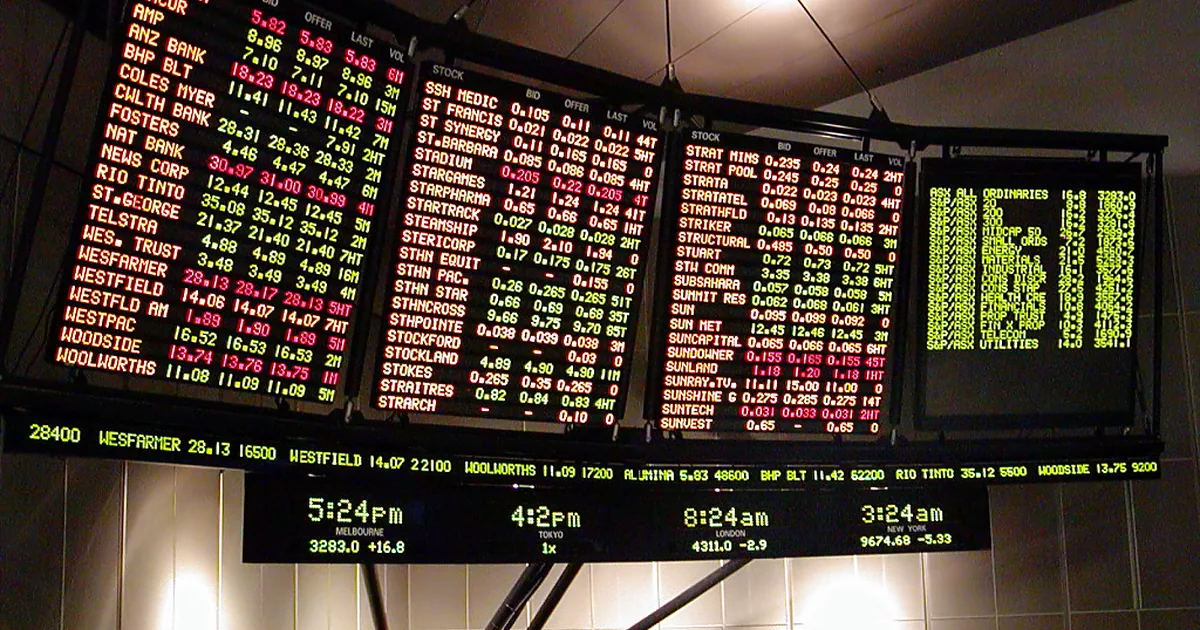
An order book is a live list. Buyers post bids, sellers post asks, and the lists change as people add, cancel, or match. The best bid and the best ask can move many times in a minute, or they can sit still. Either way, they are not a paragraph in an article.
This blog shows samples chosen before you started reading. They will still say 8 and 10, or 0.90 and 0.94, tomorrow. A live book will not promise the same. If you need a current price, you need a screen that is actually updating, and you should expect the next refresh to differ. That fact does not tell you to trade. It draws a line between a lesson and a live board.
The <a href="/world-clock/">world clock</a> shows two local times. It does not freeze an order book. A once-a-day central-bank reference can still differ from a bank, card, or airport rate. Codes such as USD and EUR name the currency. They do not name the bid side. The <a href="/currency-converter/">currency converter</a> multiplies one labeled rate. A spread still needs two numbers and a subtraction.
What this explanation is not
The words bid and ask show up in ads that want something else from a reader. The boundaries are plain.
This is a definition and a subtraction. It is not a trading class, and the fair tokens are a prop. It does not say to buy or sell bookmarks, dollars, or euros. In the arithmetic, the wide SAMPLE has the larger gap. The samples do not move, and the page does not forecast a live book. A bank, a card, and an airport can each differ from a mid-market midpoint. Your own statement shows a real payment.
Neighbouring lessons, including simple interest, sit on the <a href="/blog/topic/finance/">money and finance</a> topic. Interest uses a different formula from a spread.
Try it with a sample number
Mark every figure SAMPLE. Nothing here is a live book. A stall posts a bid of 6 tokens and an ask of 11 tokens. The spread is 11 minus 6, which is 5 tokens. The midpoint is (6 plus 11) divided by 2, which is 8.5 tokens. The spread of 5 is wider than the earlier spreads of 2 and 4. The midpoint is not on either card. Both facts can be true together.
Use the narrow currency SAMPLE again: bid 0.90, ask 0.94, spread 0.04, midpoint 0.92. On 80 dollars the gap is 80 times 0.04, which is 3.20 EUR. The bid result is 72 EUR and the ask result is 75.20 EUR. The midpoint result, 80 times 0.92, is 73.60 EUR, halfway between them.
The wide spread of 0.08 on 80 dollars is 6.40 EUR, twice the narrow gap, because 0.08 is twice 0.04. The wider spread still has the larger counted gap. Five tokens divided by the ask of 11 is about 45 percent of that ask. Name the base, then stop. The percent describes a SAMPLE card and does not tell you to buy or sell.
Frequently asked questions
What is the bid?
The bid is the price a buyer is willing to pay. At the school-fair sample the bid is 8 tokens. In the currency sample the bid is 0.90 euro per one US dollar. A bid is one posted number beside the ask. It is not a mid-market rate by itself, and it is not a suggestion to buy. The samples stay fixed so the subtraction stays easy.
What is the ask?
The ask, also called the offer, is the price a seller is willing to accept. At the fair sample the ask is 10 tokens. In the currency sample the ask is 0.94 euro per one US dollar. The ask sits across the spread from the bid. A lesson can name that side without telling anyone to buy or sell. A receipt records a real customer rate.
How do you calculate the spread?
Subtract the bid from the ask. At the fair, 10 minus 8 equals a spread of 2 tokens. In the currency sample, 0.94 minus 0.90 equals 0.04 euro per one dollar. On 50 dollars, 50 times 0.04 equals 2 euros. A wider sample spread of 0.08 becomes 4 euros on the same 50 dollars. The wider spread makes the wider gap.
Why does a wider spread cost more in the example?
The spread is the distance between two posted prices. A larger distance is more tokens or more currency units between the buyer price and the seller price. In the fair samples, a spread of 4 is a bigger gap than a spread of 2. In the currency samples, the euro difference on 50 dollars goes from 2 to 4. This page only describes that arithmetic.
Can this blog show a live order book?
An order book is the moving list of current bids and asks. A blog article is a fixed page, so it cannot show that live list. Every price here is a SAMPLE, and the currency midpoint is 0.92. A real book elsewhere may already show different numbers. Bank, card, and airport rates differ from a mid-market rate. Expect a live screen to move.



