Canada · Toronto · Elections hub
Toronto's traffic congestion is slowly easing, city figures show
In brief
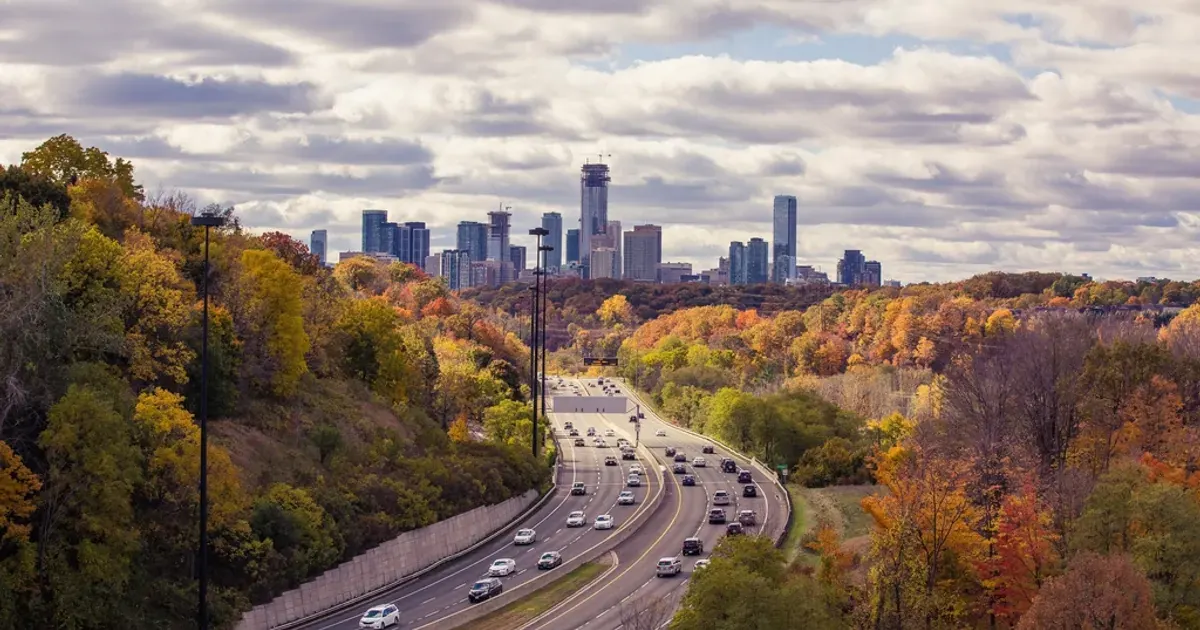
Toronto's roads are still busy, but new figures released by the City of Toronto suggest rush-hour gridlock has eased over the past few years. The city's Travel Time Index, which compares rush-hour trip times with trips on empty roads, was 1.587 citywide in July 2026, down from 1.698 in July 2025 and 1.738 in July 2024, The Globe and Mail reported.
What the Travel Time Index means
The Travel Time Index (TTI) is a simple ratio. A value of 2.00 means a trip takes twice as long at peak time as it would with no traffic, so a TTI of 1.587 means a drive that takes 20 minutes on an empty road takes about 32 minutes at rush hour. The city's highest monthly figure in 11 years of data was 2.324 in June 2018. The city's own congestion plan for 2026 to 2028 says the evening-peak index fell 8% in the downtown core and 2% citywide in 2025 compared with 2024.
Why it may be improving
Andrew Posluns, Toronto's chief congestion officer, told The Globe that the trend over the last few years shows congestion decreasing. He pointed to more traffic agents on the roads, fewer construction closures and changes to transit signal priority. A city document noted that in July 2024 about 18% of road capacity was closed for construction, and major work on the Gardiner Expressway and Eglinton Avenue has since wrapped up. Outside rankings tell a similar story: TomTom rated Toronto the most congested city in North America in 2023, but ninth in 2025. Traffic remains a big issue in the city's mayoral election, set for October 26.
VSH take: a better index is good news, but most drivers will only notice it a few minutes at a time. If you commute by car, the fuel cost calculator shows what your daily drive really costs, and the percentage calculator turns figures like 1.738 to 1.587 into a plain percentage drop (about 9%). Heading out of town instead? Our flights hub compares fares from Pearson and Billy Bishop.
This is our own summary of public figures and reporting. ViralScopeHub is not affiliated with the City of Toronto, any election campaign or any traffic data company.
Why it matters
Millions of people drive in and around Toronto every week, so even small changes in rush-hour delays add up to a lot of saved time and fuel.
People also ask
What is Toronto's Travel Time Index?
It is a ratio that compares how long trips take at rush hour with how long they take on free-flowing roads. A value of 1.5 means peak trips take 50% longer.
Is Toronto traffic getting better?
City figures show the citywide index fell from 1.738 in July 2024 to 1.587 in July 2026, so congestion has eased slightly, although roads are still busy.
Why has congestion dropped in Toronto?
The city points to more traffic agents, fewer construction closures and changes to transit signal priority. Several big road projects have also finished.
Related free tools: Fuel Cost Calculator, Percentage Calculator, Unit Converter
Sources
- The Globe and Mail: Tackling Toronto congestion may be a key issue for mayoral candidates, but it's not all bad
- City of Toronto: Congestion Management Plan 2026-2028 (Attachment 1)
Every ViralScopeHub news item is an original summary written in our own words. We link to the original reporting so you can read the full story from the publisher.