USA · Greenbelt, Md. · Elections hub
Hubble snaps a cosmic magnifying glass as NASA prepares for Roman telescope science
In brief
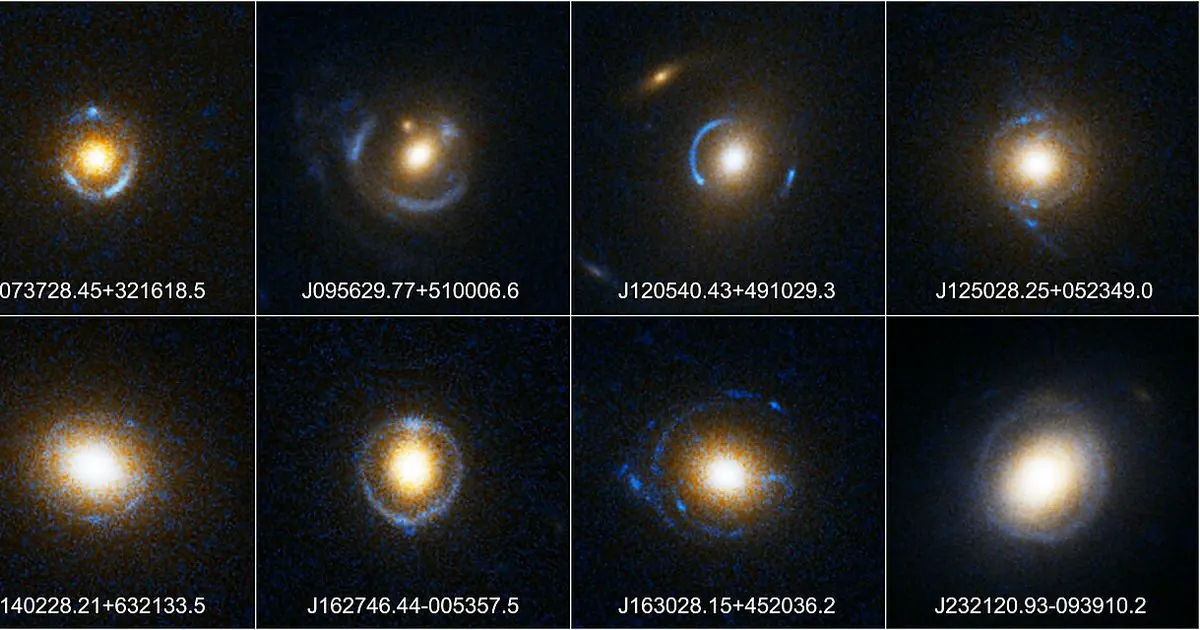
NASA released a new Hubble Space Telescope image on October 22, 2026, showing a large barred spiral galaxy sharing the view with a striking gravitational lens. In the lens, a reddish elliptical galaxy about 4.5 billion light-years away bends and magnifies light from a blue galaxy about 8 billion light-years away. It is one of many lens images Hubble is collecting to prepare for science with NASA's Nancy Grace Roman Space Telescope.
How a galaxy becomes a lens
Gravitational lensing happens when the mass of a foreground object, such as a galaxy, warps spacetime so that light from something behind it bends, stretches and brightens, a bit like a giant lens in space. In this image the background galaxy appears twice: a large arc to the upper left of the foreground galaxy and a smaller, flipped copy to the lower right. Astronomers call this an arc-counterarc pair. Because the amount of bending depends on mass, measuring the distortion reveals how much matter, including invisible dark matter, the foreground galaxy holds.
Why Hubble is helping Roman
Hubble sees mostly visible and ultraviolet light and studies objects one at a time in high detail. Roman sees mainly infrared light and has a much wider field of view, so it is expected to find far more lenses. NASA says astronomers are using Hubble's sharp images to build a computer model that will help analyse Roman's large images, and Hubble will follow up interesting lenses Roman detects. The big spiral in the frame is about the size of our Milky Way.
VSH take: the light in that blue arc set off around 8 billion years ago, long before Earth formed, which is a great fact to share with curious kids. Explore planets closer to home in our Solar System Explorer, see where the space station is right now with the ISS tracker, or browse Live Earth from space. Earlier today: NASA's low-flying farm air study in Texas.
This is our own summary of a NASA Hubble news article. ViralScopeHub is not affiliated with NASA.
Why it matters
Gravitational lenses let astronomers weigh galaxies and map dark matter, and Hubble's images are laying the groundwork for NASA's next big survey telescope.
People also ask
What is a gravitational lens?
A massive foreground object, such as a galaxy, bends and magnifies the light of a more distant object behind it, like a lens in space.
How far away are the galaxies in the new Hubble image?
The foreground elliptical galaxy is about 4.5 billion light-years away and the lensed background galaxy about 8 billion light-years away.
How will Hubble help the Roman Space Telescope?
Hubble's sharp lens images are being used to build a model for analysing Roman's wide images, and Hubble will follow up interesting lenses that Roman finds.
Related free tools: solar-system-explorer, Unit Converter
Sources
Every ViralScopeHub news item is an original summary written in our own words. We link to the original reporting so you can read the full story from the publisher.