USA · Huntsville, Alabama, USA · Elections hub
NASA changes how its Moon landers will meet astronauts as it races toward a 2028 landing
In brief
NASA said on October 23, 2026, that it and its two commercial lander providers, SpaceX and Blue Origin, have streamlined their crewed lander designs and changed how the missions will fly, with the goal of returning American astronauts to the Moon's surface in 2028. The biggest change is that the landers and NASA's Orion spacecraft will no longer meet in a near-rectilinear halo orbit around the Moon. Instead, each company will use an orbit suited to its own system.
Two different routes to the Moon
Under SpaceX's revised plan, several tanker Starships will refuel a depot Starship in low Earth orbit, which then fuels the Starship lander. The lander will wait for Orion and its crew in Earth orbit, the two will dock, and the lander will then push the combined stack to low lunar orbit. NASA is modifying Orion so Starship can do this. NASA said using low lunar orbit cuts how much propellant Starship needs to gather in space and shortens the trip back to Orion after astronauts leave the surface. Blue Origin, for its accelerated 2028 mission, will put off refuelling in space and instead use three transfer stages that work like a multistage rocket to send its Blue Moon Mark 2 lander to an elliptical polar orbit around the Moon. There, Orion docks with the lander and two crew members descend to the lunar South Pole.
Who lands first
In both cases, two astronauts go down to the surface while two stay aboard Orion, and each company must first fly an uncrewed demonstration. NASA said it will decide which provider is first selected for the 2028 landing based on lander readiness, with a second crewed landing to follow, and it is targeting two Moonwalks of about two hours each to collect samples and test the Axiom Space spacesuit. Artemis III has been redefined as a test in low Earth orbit next year, where Orion will practise rendezvous and docking with test versions of both landers. NASA Administrator Jared Isaacman said the agency's machine shops are running around the clock to reach the goal.
VSH take: Changing orbits sounds like a small detail, but it shows NASA picking speed and simplicity over one shared plan, letting each company fly the way its hardware works best. Two very different landers also means a backup if one runs late. Watch the Moon's phases with our moon phase tool, follow the space station on the ISS tracker, explore the planets in the solar system explorer or try the space quiz. Planning a trip to see a launch in Florida? Start with the flights hub. Studying physics? Our study tools and exam guides can help.
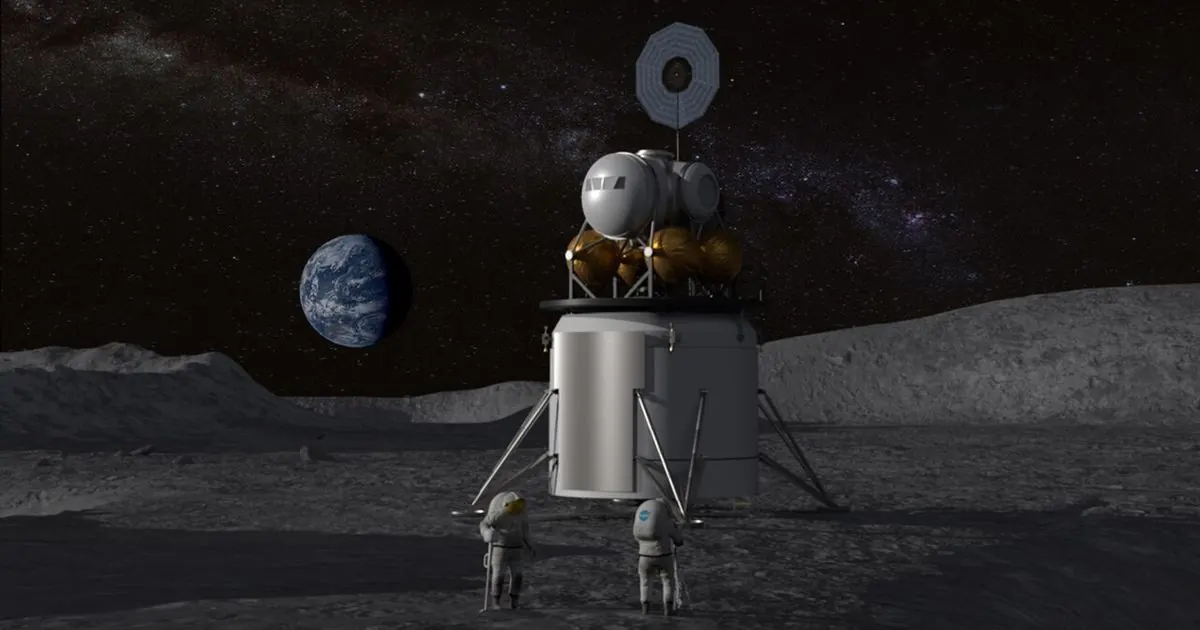
ViralScopeHub is an independent news summary site and is not affiliated with NASA, SpaceX, Blue Origin or Axiom Space. The image is older NASA concept art of a generic crewed lander, not either company's final design.
Why it matters
The changes are meant to speed up the first crewed Moon landing since 1972, now aimed for 2028, and they show how NASA plans to use two competing landers.
People also ask
When does NASA plan to land astronauts on the Moon?
NASA is aiming for a crewed landing in 2028, with a second crewed landing opportunity to follow.
What changed in the lander plans?
Orion and the landers will no longer meet in a near-rectilinear halo orbit. SpaceX's Starship will dock with Orion in Earth orbit and carry it to low lunar orbit, while Blue Origin's lander will meet Orion in an elliptical polar orbit.
What is Artemis III now?
NASA redefined Artemis III as a mission in low Earth orbit next year to test rendezvous and docking between Orion and test versions of both landers.
Which company will land first?
NASA said it will choose based on lander readiness. Both companies must first fly an uncrewed demonstration.
Related free tools: iss-tracker, sunrise-sunset-moon-phase
Sources
Every ViralScopeHub news item is an original summary written in our own words. We link to the original reporting so you can read the full story from the publisher.