USA · Greenbelt, Md. · Elections hub
NASA's Roman Space Telescope passes checkout and enters its final commissioning phase
In brief
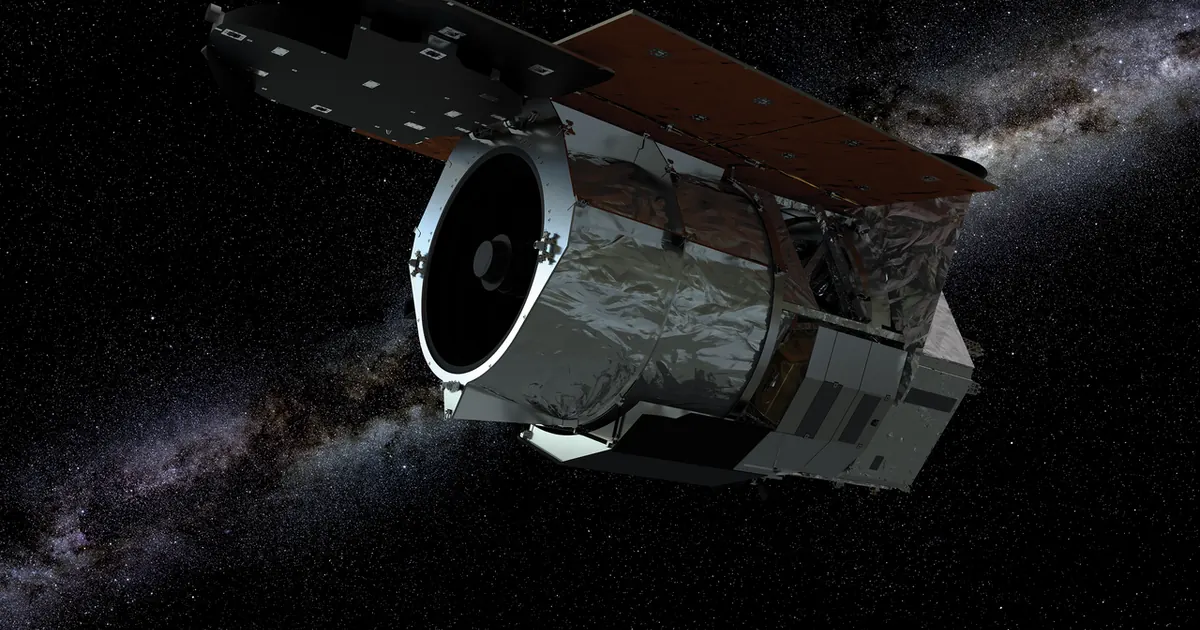
NASA said on October 22, 2026 that its Nancy Grace Roman Space Telescope has entered the science commissioning phase after a full checkout of the observatory and its main instrument. The team is now fine-tuning image quality and calibrating the instruments before Roman begins regular science operations.
What the team checked
"We've established that the observatory is fully functional," said Julie McEnery, Roman's senior project scientist at NASA's Goddard Space Flight Center. She explained that the telescope can guide, take exposures, send data back properly and turn from one target to another. One early worry was whether Roman's fine guidance system, which locks onto individual stars to hold steady, could cope with very crowded star fields or dusty nebulae. Test observations showed it performs well in all those cases, according to operations project scientist Tom Barclay.
Speed is the superpower
The team is now running a series of planned test observations to measure performance, calibrate how the instruments respond to light and sharpen the images. NASA says the tests have gone so well that scientists are already seeing Roman's big strength: speed. Large mosaics of the sky that used to be special projects should become routine. Wide Field Instrument scientist Josh Schlieder said a typical observation will show objects about a hundred million times fainter than the human eye can detect. Some systems are performing better than required, which NASA says could open up new science.
Earlier on the same day, NASA also shared Hubble images of gravitational lenses taken to help plan Roman's science, a sign of how the two telescopes are meant to work together.
VSH take: commissioning news is not as flashy as first pictures, but it is the moment that tells you a mission is healthy. For space fans, the exciting part is what comes next: huge, detailed sky surveys that could turn up planets, stars and galaxies nobody has seen. You can also follow what is happening above Earth right now on our Live Earth from space page.
ViralScopeHub is an independent site and is not affiliated with NASA.
Why it matters
Roman is designed to survey huge areas of the sky quickly, which could help scientists study dark energy, find many new exoplanets and map galaxies in far more detail than before.
People also ask
What is the Nancy Grace Roman Space Telescope?
A NASA space observatory designed to survey large areas of the sky in infrared and some visible light, named after Nancy Grace Roman, NASA's first chief astronomer.
What does science commissioning mean?
It is the final testing stage, when the team calibrates the instruments and fine-tunes image quality before regular science operations begin.
How faint can Roman see?
NASA says a typical observation with Roman's Wide Field Instrument will reveal objects about a hundred million times fainter than the human eye can detect.
Related free tools: Scientific Calculator
Sources
Every ViralScopeHub news item is an original summary written in our own words. We link to the original reporting so you can read the full story from the publisher.