World · Ann Arbor, Mich. · Elections hub
Hubble study: light escaped young galaxies before supernova winds formed
In brief
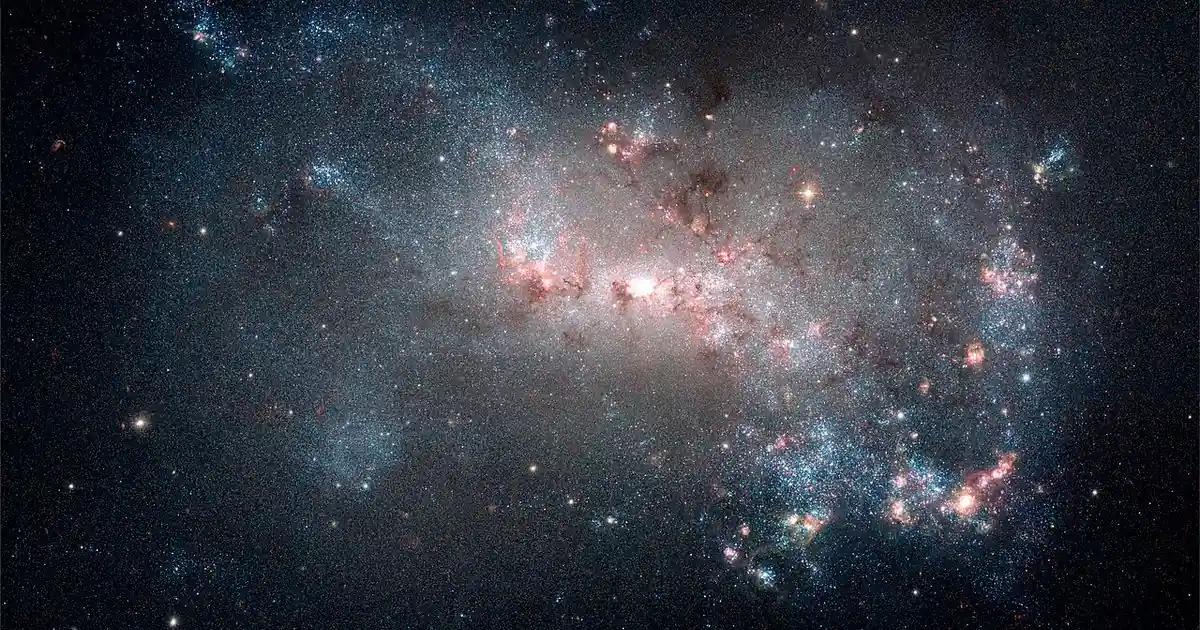
An international team using NASA's Hubble Space Telescope has found that ionizing light escapes from compact starburst galaxies before strong supernova-driven winds form, not because of them. The study, published in Nature Astronomy and announced by the University of Michigan on October 21, 2026, challenges a leading explanation for how the early universe cleared its fog of hydrogen.
The fog that cleared
In its first billion years, the universe was filled with neutral hydrogen gas that blocked ultraviolet light. Energetic radiation from early galaxies then split that hydrogen into charged particles, a period called reionization that began about 13 billion years ago. Lead author Cody Carr, now a postdoctoral researcher at the University of Michigan, calls it "the last major phase transition of the universe". Astronomers still do not know exactly which objects caused it or how the radiation got out of galaxies.
A popular idea was that winds from exploding massive stars (supernovae) blew holes in the gas around early galaxies, letting the radiation escape. To test it, the team used Hubble to study nearby starburst galaxies, which form stars very quickly and resemble the galaxies thought to have driven reionization.
What Hubble showed
By measuring which wavelengths of light escaped and how fast the gas was moving, the researchers found that the galaxies with the fastest winds let out the smallest share of ionizing radiation. In the galaxies that leak the most, those winds were missing. Co-author Stephan McCandliss of Johns Hopkins University said the supernova energy appears to have increased, rather than reduced, the gas and dust that blocks the radiation. The results support a different picture in which young stars help light escape before the first supernovae go off. The study involved nearly 30 collaborators from more than a dozen institutions.
VSH take: it is a nice reminder that Hubble, after more than three decades in orbit, is still changing textbooks by studying galaxies close to home that act like baby galaxies far away. For more sky-watching from your screen, explore our Live Earth and space hub or follow the International Space Station tracker. Students can add this to their science current affairs notes on our exams hub.
This is our own summary of a university news release and the published study. ViralScopeHub is not affiliated with NASA, the University of Michigan or the journal.
Why it matters
Reionization shaped the universe we see today, and knowing how light escaped early galaxies helps astronomers build better models and plan observations with Hubble and Webb.
People also ask
What is reionization?
It is the period, starting about 13 billion years ago, when radiation from early galaxies split the neutral hydrogen filling the universe into charged particles, clearing the fog that blocked ultraviolet light.
What did the Hubble study find?
In nearby starburst galaxies, ionizing light escaped before strong supernova-driven winds formed; galaxies with the fastest winds leaked the least radiation.
Where was the study published?
In the journal Nature Astronomy, in a paper titled Lyman Continuum Escape During the Onset of Galactic Winds in Compact Starbursts.
Related free tools: iss-tracker
Sources
- University of Michigan News: Shining new light on the 'last major phase transition in the universe'
- Nature Astronomy: Lyman Continuum Escape During the Onset of Galactic Winds in Compact Starbursts
Every ViralScopeHub news item is an original summary written in our own words. We link to the original reporting so you can read the full story from the publisher.