World · Leiden, Netherlands · Elections hub
A star collision 200,000 years ago may explain why the Orion Nebula looks younger than its stars
In brief
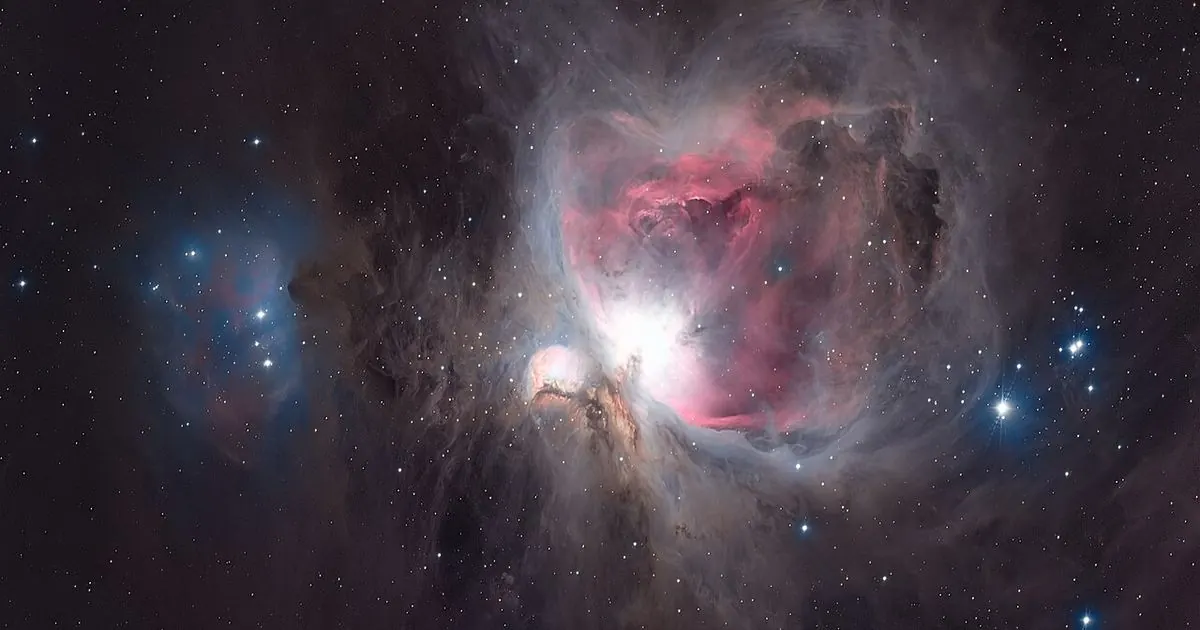
Astronomers led by Maite Wilhelm of Leiden University have proposed a new answer to the Orion Nebula's age paradox: its most massive central star, Theta-1 Orionis C1, may have formed when two stars collided about 200,000 years ago. Leiden University announced the work on October 23, 2026, and the study is due to appear in Astronomy & Astrophysics. Computer simulations suggest the sudden brightening after such a merger could explain why the nebula's gas shell and planet-forming discs look far younger than its roughly one-million-year-old stars.
The puzzle
The Orion Nebula is a huge star-forming cloud that you can see with the naked eye in the constellation Orion. Many of its young stars are wrapped in discs of gas and dust where planets form. Radiation from the massive central star slowly strips these discs, giving them tadpole-like shapes. The trouble is that the discs are losing material so fast they should have vanished long ago, given the stars are about a million years old. The big gas shell around the central star is expanding at about 13 kilometres per second, and running that backwards suggests the shell formed only a few hundred thousand years ago.
The proposed answer
The team suggests Theta-1 Orionis C1, about 33.5 times the mass of the Sun, began as a pair of stars orbiting each other. A third star may have disturbed the pair, knocking one star off course until the two collided and merged. Before the merger the two stars gave off much less radiation, so the dusty discs could survive. Afterwards the new, heavier star shone far brighter, quickly evaporating the discs. The simulations say the merger alone gives about 30 times the push needed, short of the roughly 100 times required to drive the shell's expansion, so the researchers think cool gas boiling off the discs and mixing into the hot bubble adds the rest. The idea could also explain the star's tilted magnetic field and its slight excess of nitrogen.
Co-author Simon Portegies Zwart said it is the first time astronomers have seen the consequences of a major stellar collision in our own cosmic neighbourhood, and that such collisions may be more common than once thought.
VSH take: This is a nice example of how science works: two separate mysteries, one possible cause. It is still a proposal backed by simulations, so expect other astronomers to test it. Orion is easy to spot in winter evening skies, so check tonight's dark hours with our sunrise and sunset tool, look at Earth from orbit on our Live Earth from Space page, or test yourself with our space quiz.
ViralScopeHub is an independent news summary site and is not affiliated with Leiden University or the journal. See the original release for full details.
Why it matters
The Orion Nebula is the nearest big star nursery to Earth, so understanding its history helps astronomers learn how stars and planets, including systems like ours, form.
People also ask
What is the Orion Nebula age paradox?
The nebula's stars are about a million years old, but its expanding gas shell and fast-evaporating planet-forming discs look only a few hundred thousand years old.
What do the Leiden astronomers propose?
That the central star Theta-1 Orionis C1 formed when two stars in a triple system collided about 200,000 years ago, making it suddenly much brighter.
Can I see the Orion Nebula myself?
Yes. It is visible to the naked eye as a fuzzy patch below Orion's Belt, best seen on dark winter evenings in the Northern Hemisphere.
Related free tools: Sunrise & Sunset, World Clock
Sources
Every ViralScopeHub news item is an original summary written in our own words. We link to the original reporting so you can read the full story from the publisher.